Starting the School Year Strong
Your Back-to-School Guide for Supporting Your Autistic Child
A new school year can bring excitement, uncertainty, and many details for families to manage. For an autistic child, thoughtful preparation can make the transition more predictable, protect their energy, and help the school team understand how to support them from the very beginning.
You do not have to prepare everything perfectly. The goal is to create a strong starting point, share meaningful information, and build a plan that can be adjusted as your child’s needs become clearer.
Back-to-School Quick Checklist
Start With Your Child’s Strengths and Current Needs
Before making school plans, take time to think about who your child is right now. Consider their interests, communication style, sensory preferences, strengths, worries, and the situations that have been difficult in the past.
Ask yourself what helps your child feel safe and ready to learn.
Do they need extra processing time? Do they communicate with speech, gestures, writing, pictures, or an AAC device? Are crowded spaces, loud sounds, unexpected touch, bright lights, certain clothing, or changes in routine especially challenging?
Also consider what has changed since the last school year. Your child may have developed new skills, outgrown previous supports, started using a new communication system, experienced changes in health, or become more independent in some areas.
These changes should be reflected in the information you share with the school.
Parent Tip: Write down three things your child enjoys, three things that help them feel regulated, and three situations that are usually difficult. This can make it easier to communicate clearly with the school team.
Approach preparation from a strength-based perspective. Your child is more than a diagnosis, a set of behaviors, or a list of challenges.
Their interests and abilities can help teachers build connection, motivation, and trust.
Review the IEP or Section 504 Plan Carefully
If your child receives special education services under the Individuals with Disabilities Education Act, review the entire IEP before school begins. If your child receives accommodations through Section 504, review the 504 plan with the same care.
Read the plan from beginning to end, including present levels of performance, annual goals, services, accommodations, modifications, assistive technology, transportation arrangements, behavior supports, and the people responsible for providing each service.
Pay close attention to frequency, duration, location, and start dates. A general statement such as “access to breaks” may need more detail so everyone understands what that support looks like in practice.
Ask whether the plan still reflects your child’s current needs.
Are communication supports clearly described? Is your child allowed to use their AAC device throughout the school day? Are sensory breaks, quiet spaces, visual schedules, flexible seating, or transition support included when needed? Does the plan address lunch, recess, assemblies, fire drills, field trips, arrival, dismissal, and transportation?
Quick Tip: If a support sounds too vague, ask for clearer wording. Specific details often make it easier for staff to provide consistent support.
If something is missing or outdated, request an IEP meeting or 504 review in writing. You can also request a new evaluation or additional assessment if you believe your child’s current needs are not fully understood.
Depending on the concern, this might include speech and language, occupational therapy, academic, psychological, assistive technology, functional behavior, or transportation-related evaluation.
Keep your request clear and specific. Explain what you have observed, how it affects your child’s access to education, and what information you are asking the team to review.
School district procedures and timelines can vary, so ask the district to explain the next steps.
The U.S. Department of Education’s parent guide to the IEP process can help you prepare for conversations with your child’s school team. Remember that this information is educational, not legal advice.

Organize Medical, Sensory, and Communication Information
Create a simple school folder, digital file, or binder for important information. Include the current IEP or 504 plan, evaluation reports, progress notes, emergency contacts, health forms, medication instructions, allergy information, seizure or medical action plans, and details about food restrictions or dietary needs.
Share only what the school needs to safely and effectively support your child, and ask how sensitive information will be stored.
If your child receives outside services such as speech therapy, occupational therapy, counseling, or ABA, you may choose to share relevant recommendations with the school after providing appropriate consent. Outside providers and school staff have different roles, so focus on practical strategies that can be used across settings.
If ABA services have ended or are not available, your child can still receive meaningful support.
Document the strategies that have helped your child communicate, transition, regulate, complete daily tasks, and recover after stress. Ask the school team to consider those strategies without assuming that one type of therapy is required for your child to succeed.
Create a One-Page Introduction for the School Team
A short student profile can help a new teacher quickly understand your child as a person. You might include a favorite interest, strengths, preferred communication methods, signs of stress, sensory needs, helpful prompts, calming strategies, and ways to encourage participation.
Use respectful and individualized language.
Instead of writing that your child “refuses” work, explain what may happen when the task is too difficult, unclear, lengthy, or overwhelming. Instead of describing a child as “noncompliant,” explain what support helps them understand and respond.
You can also include what your child would like adults to know about them.
Some children may help create the profile by choosing pictures, recording a short message, or sharing their favorite activities. Ask the teacher whether they can provide a photograph of the classroom, teacher, desk, bus, or arrival area. These images can become part of a personal back-to-school story.
Build Communication With the New School Team
Contact the teacher, case manager, special education teacher, school counselor, speech-language pathologist, occupational therapist, nurse, and transportation contact as appropriate. Introduce yourself, share your child’s profile, confirm that the team has access to the current plan, and request a brief meeting if needed.
Ask who your primary contact will be. Decide whether communication will happen through email, a school communication app, a notebook, scheduled phone calls, or a combination.
Agree on what counts as an urgent concern and who should be contacted during the school day.
A predictable communication rhythm can prevent small concerns from becoming major problems. You might request a brief weekly update during the first month, followed by less frequent check-ins once routines are established.
Ask how progress toward IEP goals will be shared and when formal progress reports will be provided.
Parent Tip: After a meeting or phone call, send a short follow-up email summarizing next steps. Written records can be very helpful if questions come up later.
Keep important communication in writing. After a phone call or meeting, send a brief message confirming what was discussed and what each person agreed to do. Save copies of plans, evaluations, emails, and progress reports in one place.
Prepare Your Child for the New Routine
Begin shifting the home schedule gradually rather than waiting until the night before school. Move bedtime and wake-up time closer to the school schedule in small steps.
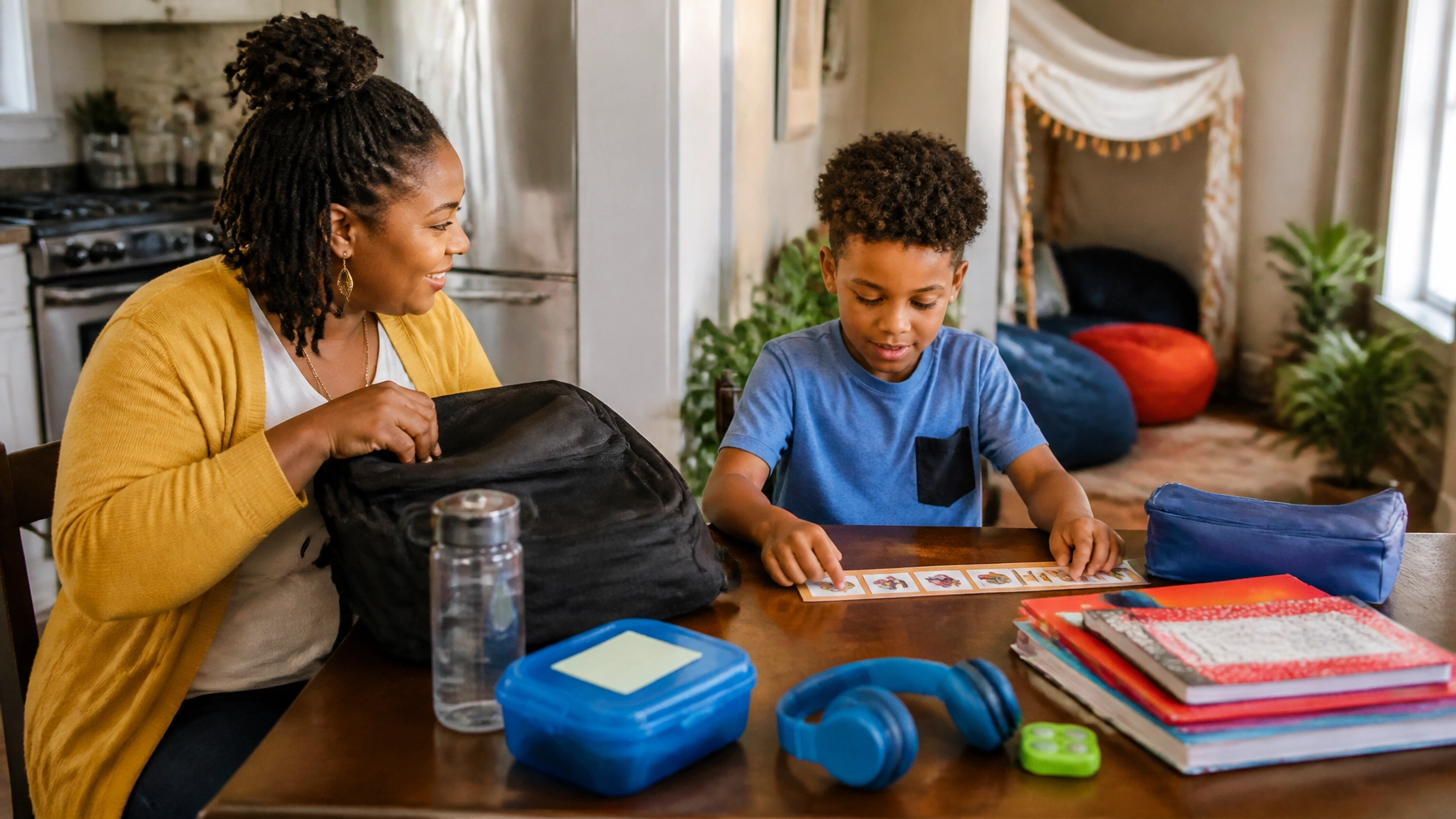
Practice getting dressed, eating breakfast, packing the backpack, using the bathroom, and leaving the house in the same general order each morning.
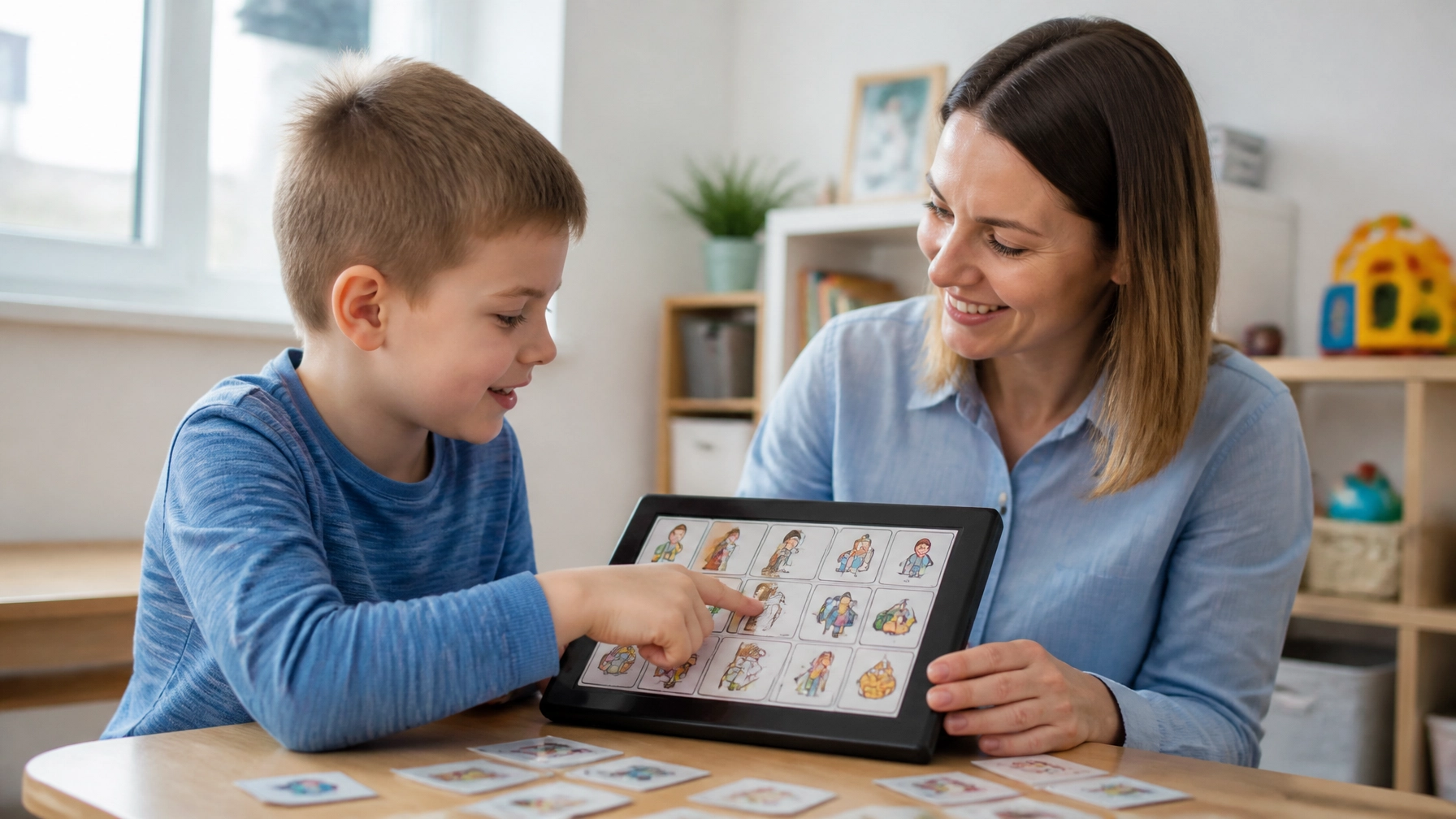
Use a visual schedule with photographs, drawings, written words, or objects, depending on what your child understands best. Include the parts of the day that are most important to them, such as breakfast, transportation, classroom, lunch, recess, home, and a preferred after-school activity.
A calendar or countdown can make the first day easier to understand. Avoid counting down in a way that creates pressure.
Pair the calendar with reassuring information about what will stay the same and what may be different.
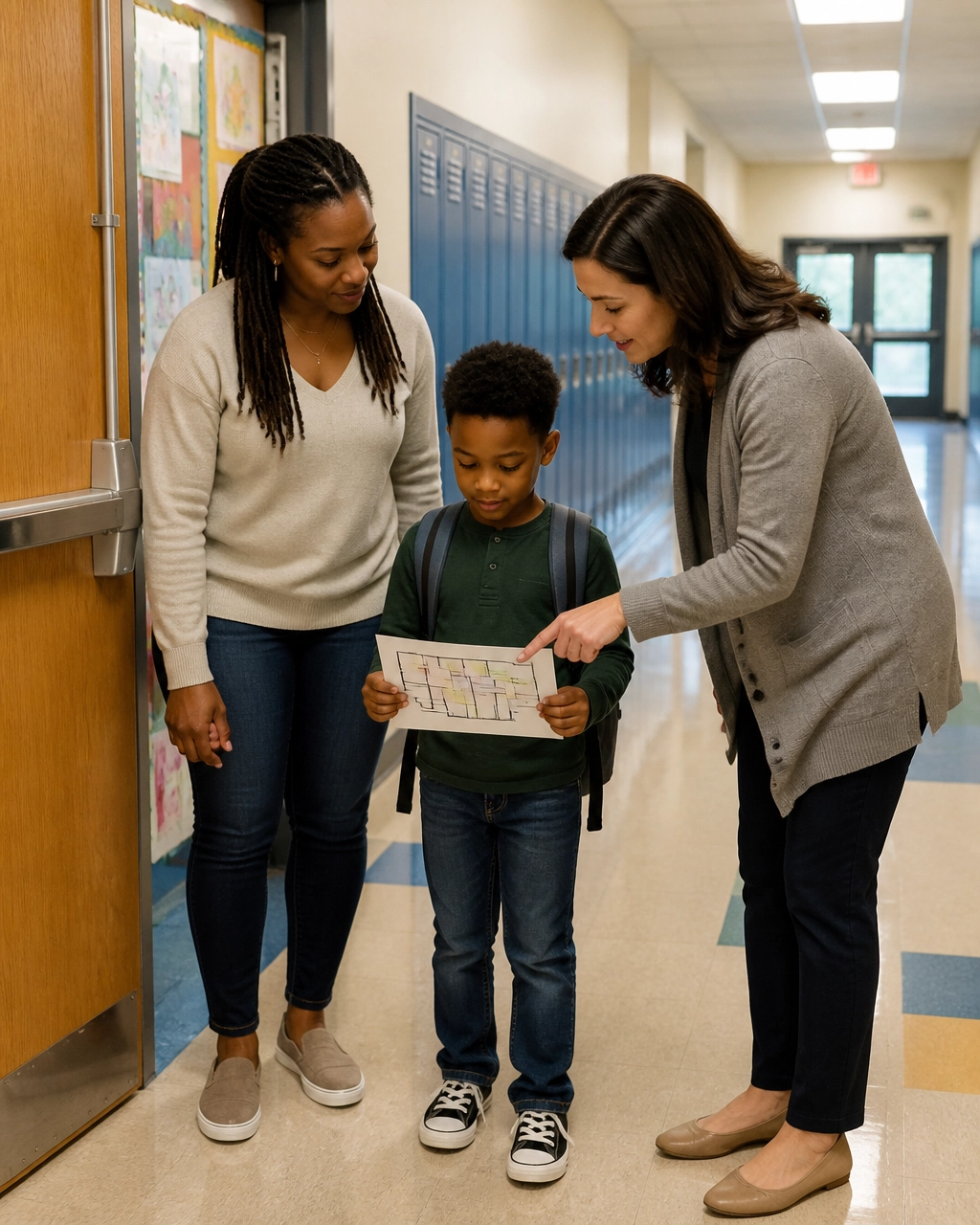
If possible, visit the school before classes begin. Walk through the entrance, classroom, bathroom, cafeteria, playground, bus area, and quiet space. Practice the route to school, the walk to the bus stop, or the car drop-off routine.
If a school visit is not possible, ask for photographs or a virtual tour.
Practice transitions without turning them into tests. Use simple language such as, “First shoes, then backpack, then car.” Allow extra time and repeat the routine across several days.
Plan a Sensory-First Morning and Afternoon
A sensory-friendly routine begins before your child enters the school building. Choose comfortable clothing and remove tags or irritating materials when possible. Prepare breakfast and lunch options your child is likely to tolerate, while avoiding unnecessary pressure around food.
Keep the morning calm and predictable. Reduce background noise, limit rushed instructions, and give one direction at a time.
A visual timer, checklist, or transition warning may help your child move from one activity to the next.
The after-school period deserves equal attention. Many children hold themselves together during the school day and release their stress once they reach home.
This does not mean they are being difficult. It may mean they need quiet, food, movement, deep pressure, rest, or connection before discussing the day.
Quick Tip: If afternoons are usually hard, protect that time as much as possible. A calmer first hour after school can make the rest of the evening easier.
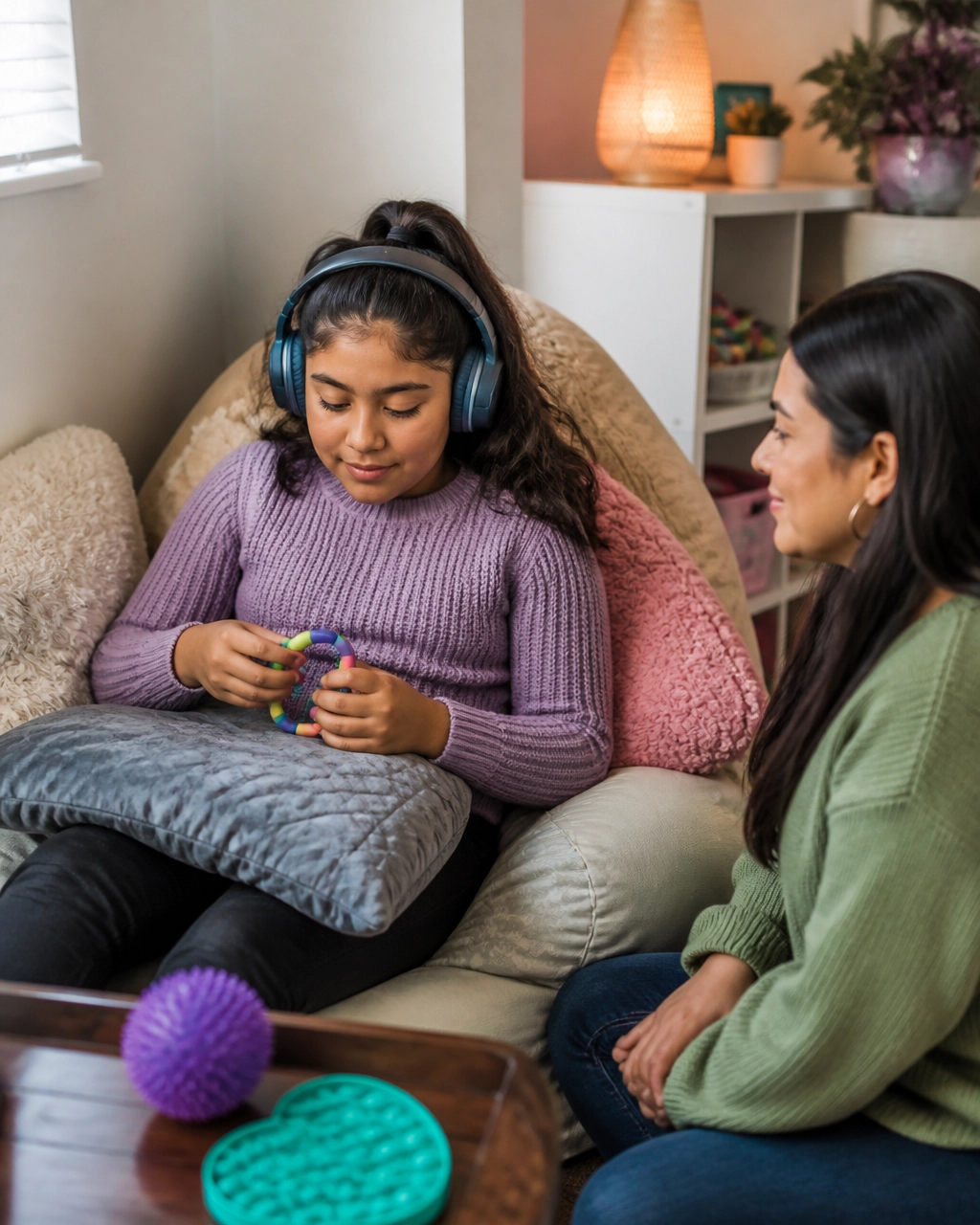
Create a calm space where your child can decompress without punishment. Offer choices such as headphones, dim lighting, a rocking chair, a weighted lap pad if appropriate, drawing, music, a favorite book, or quiet time. Follow your child’s cues and never force sensory tools that they dislike or find uncomfortable.
Prepare Classroom Sensory and Communication Supports
Talk with the school before sending tools to the classroom. Helpful supports may include noise-reducing headphones, a visual schedule, a first-then board, a visual timer, fidgets, flexible seating, a privacy folder, a break card, or access to a quiet area.
The best support is not always the most expensive one. Clear instructions, predictable routines, reduced visual clutter, movement opportunities, and respectful adult responses can make a significant difference.
If your child uses AAC, make sure the device or communication system is available throughout the day, not only during speech therapy.
Ask who will keep it charged, who will model its use, and what happens if it is lost or damaged. Communication should never be removed as a punishment.
Prepare for Change, Anxiety, and Meltdowns
Even with excellent planning, the first weeks may be difficult. New adults, unfamiliar expectations, crowded hallways, schedule changes, substitute teachers, fire drills, assemblies, and transportation problems can overwhelm a child.
Ask the school team to create a clear response plan. It should explain early signs of distress, helpful language, where your child can go, who provides support, how adults maintain safety, and how the child returns to learning afterward.
The plan should focus on prevention, communication, dignity, and regulation rather than punishment.
During a meltdown, reduce demands and language. Keep your voice calm, protect privacy and safety, and give your child time to recover.
Avoid lengthy explanations while your child is overwhelmed. Afterward, look for the unmet need or environmental trigger and share that information with the school.
If anxiety continues or your child’s behavior interferes with learning, request a team discussion. You may also ask whether additional evaluation, a Functional Behavioral Assessment, counseling support, or changes to the IEP or 504 plan are appropriate.
Parent Tip: It helps when the school knows what early signs of stress look like for your child before they reach a crisis point.
For additional family-friendly learning, visit We Are Autism’s Educational Articles and explore the Building Bridges video library, including the We Are Autism YouTube channel.
Helpful Resources for Home & School
Books can give children a gentle way to talk about differences, feelings, communication, and belonging. Marcus Good Boy answers children’s questions about autism and hyperlexia, while Rhys Wilson’s Book of Poems offers joyful opportunities to connect through imagination and language.
For classroom or family conversations about inclusion, The Unicorn and the Dragon: A Lesson in Kindness can open a discussion about friendship, compassion, and treating people with respect.
Families can also explore Building Bridges for videos that support learning, communication, and problem-solving in engaging, family-friendly ways.
Support Yourself, Too
Back-to-school preparation can be exhausting. Connect with parents who understand the journey through the We Are Autism Care Circle and support groups. Ask questions, share ideas, and allow yourself to learn from families whose experiences may be different from your own.
Plan small ways to protect your own well-being. Keep important school documents organized, write down questions before meetings, accept practical help, and make space for rest when possible.
You do not have to be available every minute to be a strong advocate.

Check In and Adjust After School Starts
The first plan is a starting point, not a final answer. During the first few weeks, watch for changes in sleep, appetite, communication, energy, mood, toileting, school refusal, or recovery time after school.
These signs may show that the day is too demanding or that a support needs to be changed.
Share observations with the school team and ask what they are seeing. Celebrate small successes, such as entering the building, using a break card, trying a new routine, or communicating a need.
A successful school year is not one in which your child appears calm every moment or never needs help. It is one in which your child is understood, supported, respected, and given meaningful access to learning. With preparation, collaboration, and patience, families and schools can build a bridge that helps every child begin the year with greater confidence and connection.
Join the We Are Autism Care Circle
If you are looking for encouragement, practical guidance, and a community that understands, connect with the We Are Autism Care Circle and support groups.
Explore Parent Resources
Visit We Are Autism’s Educational Articles and Building Bridges for more family-friendly resources to support your child at home, at school, and beyond.

Charlene Pinnock is the Founder and Executive Director of We Are Autism, a nonprofit organization dedicated to educating, empowering, and supporting families navigating the autism journey. As a parent of a child with autism and a passionate advocate, Charlene combines personal experience with practical resources to help families build confidence, strengthen advocacy skills, and connect with their communities. Through educational programs, workshops, articles, and digital resources, her mission is simple: because no one should walk this journey alone.
.avif)