
When a child is diagnosed with autism: or when a parent first begins noticing developmental differences: one of the first things families may hear is, “Your child needs therapy.”
But what does that actually mean?
There is not just one type of autism therapy. A child may benefit from different supports depending on their communication, sensory, behavioral, motor, feeding, emotional, and everyday living needs.
For parents and caregivers, the terminology can quickly become overwhelming. Speech therapy. Occupational therapy. ABA. Feeding therapy. Behavioral support. Social skills. With so many options, where do you begin?
The most helpful place to start is by looking at your child as an individual. The right support should respond to your child’s strengths, needs, communication style, preferences, and quality of life.
Speech & Language Therapy
Speech therapy is not only for children who do not speak. Speech-language pathologists, often called SLPs, support many different types of communication.
An SLP may help a child express wants and needs, understand language, participate in conversation, improve speech clarity, use gestures, or develop other ways of communicating. Some children may also benefit from Augmentative and Alternative Communication, known as AAC. AAC can include picture cards, communication boards, sign language, tablets, or speech-generating devices.
Communication may also include helping a child understand turn-taking, respond to questions, share interests, or communicate during play. For some children, an SLP may help families understand echolalia and support the development of more functional communication.
Communication is much bigger than spoken words. A child who communicates through gestures, facial expressions, body movements, pictures, signs, or a device is still communicating. The goal is to give every child reliable ways to express preferences, needs, feelings, and ideas.
Families can learn more about communication and autism through the Building Bridges educational resources, which include videos designed to support parents, caregivers, and children.

Occupational Therapy
Occupational therapy, or OT, helps children participate more successfully in everyday activities. For children, these activities may include playing, learning, getting dressed, eating, brushing teeth, writing, using utensils, and becoming more independent.
An occupational therapist may work with a child on fine motor skills, handwriting, dressing, toileting routines, motor planning, sensory regulation, and daily living skills. OT may also help a child develop strategies for managing activities that feel uncomfortable, unfamiliar, or overwhelming.
For some autistic children, sensory differences can make ordinary experiences much more difficult. Getting dressed may be challenging because of clothing textures. Brushing teeth may feel painful or overwhelming. A noisy classroom, crowded store, or busy family gathering may lead to distress because the environment is too intense.
OT should not be about forcing a child to tolerate everything. Instead, supportive occupational therapy may help families understand the child’s sensory needs and make practical changes. This might include reducing noise, offering movement breaks, adjusting clothing choices, using visual supports, or creating a calmer routine.
Behavioral Support
Behavioral support can help families understand why a behavior may be happening and teach skills that help a child communicate, cope, and participate more successfully in daily life.
Support may be helpful when a child is experiencing aggression, biting, hitting, self-injurious behavior, elopement, difficulty with transitions, emotional regulation challenges, or struggles with daily routines and independence.
One important question for families and providers to ask is, “What is my child’s behavior trying to communicate?”
A behavior may be connected to communication difficulties, sensory needs, frustration, pain or discomfort, fear, fatigue, a desire to access something, or an attempt to escape an overwhelming situation. Understanding the reason behind a behavior can change the way adults respond.
Applied Behavior Analysis, or ABA, is one form of behavioral support that many families encounter in the United States. Families may also explore positive behavior support, developmental approaches, parent coaching, and other strategies. Every approach should be evaluated carefully.
Look for providers who use respectful, individualized strategies; prioritize safety and communication; involve parents and caregivers; and respect the child’s autonomy and well-being. Support should help children build meaningful skills rather than simply making them appear less autistic.
For families who do not have access to ABA, or for those whose child’s ABA services have ended, practical support is still possible. Parents can ask an SLP, OT, school team, developmental provider, or qualified behavior professional for help identifying triggers, teaching communication, preparing for transitions, and building daily routines. Parent coaching can also help caregivers use strategies during real-life activities at home and in the community.
Feeding Therapy

Eating difficulties can go far beyond being a “picky eater.”
Some autistic children may have challenges related to food textures, smells, colors, temperatures, chewing, swallowing, trying unfamiliar foods, or eating a very limited variety of foods. Mealtimes may also become stressful when a child has difficulty sitting at the table, tolerating changes, or communicating that they are full or uncomfortable.
Depending on the child’s needs, feeding support may involve an occupational therapist, speech-language pathologist, dietitian, pediatrician, or another medical provider. Feeding concerns involving choking, swallowing safety, weight changes, nutritional deficiencies, or a very restricted diet should be discussed with a qualified healthcare professional.
The goal of feeding support should be safe, respectful, and individualized. It should consider nutrition and health while also recognizing sensory needs, communication, preferences, and the emotional experience of eating.
Social and Emotional Support

Some autistic children benefit from support with navigating social situations and understanding or expressing emotions. This may include learning how to enter a conversation, recognize when someone needs space, identify feelings, manage worry, or communicate when a situation feels uncomfortable.
Social and emotional support should not be about forcing a child to hide autistic traits or simply “act normal.” Children should not be made to feel ashamed of their natural communication, movement, interests, or ways of regulating.
Instead, the goal should be to build communication, confidence, relationships, self-advocacy, emotional well-being, and quality of life. A child may need support learning how to communicate boundaries, ask for a break, recognize unsafe situations, or express disagreement.
Support should also make room for the child’s interests and strengths. Shared interests can become meaningful ways to connect with parents, siblings, teachers, and peers.
So, Which Therapy Does My Child Need?
There is no single answer because autistic children are individuals. Two children with the same diagnosis may have completely different strengths and support needs.
Instead of beginning with, “Which autism therapy is best?” try asking, “What does my child need help with right now?”
If communication is the biggest challenge, speech-language therapy may be a helpful starting point. If sensory needs are interfering with dressing, grooming, school, or family activities, occupational therapy may offer practical support. If eating is affecting health or daily life, ask about feeding services. If safety, transitions, or emotional regulation are major concerns, behavioral or developmental support may be appropriate.
Your child may need more than one type of support, but that does not mean every therapy must begin at once. Time, cost, transportation, availability, and your child’s comfort all matter. A realistic plan that your family can maintain is often more helpful than an overwhelming schedule.
Questions Parents Can Ask a Provider
Before beginning a service, ask what specific need the provider will address and what the goals will be. Ask how progress will be measured and how you will be involved.
It is also reasonable to ask what can be practiced at home, how the provider will support your child’s strengths, and what will happen if the approach is not helping. Parents can ask how their child’s communication, dignity, sensory needs, preferences, and autonomy will be respected.
You may also want to ask how providers will coordinate with one another. When appropriate, sharing evaluation reports and agreeing on consistent goals can help a child use communication, sensory, and coping strategies across home, school, and therapy settings.
Parents should feel comfortable asking questions. You are part of your child’s team.

Finding Services in the United States
In the United States, families may access services through several different systems.
Children under age three may qualify for their state’s early intervention program. An autism diagnosis is not always required; developmental delays in communication, social skills, or motor skills may be enough to qualify. Families can contact their state’s early intervention office to ask about an evaluation.
Children age three and older may qualify for school-based services through an Individualized Education Program, or IEP. Speech therapy, occupational therapy, physical therapy, and behavioral support may be included when they are needed for educational access. School-based therapy focuses on educational needs and may not address every medical or home-related concern.
Families may also explore private providers through health insurance, Medicaid, community programs, or local nonprofit organizations. Coverage and eligibility vary by state and plan, so contacting your insurance company and asking your child’s primary care provider or developmental specialist for referrals may be helpful.
If services are limited, parent education and community support can make a meaningful difference. The We Are Autism Care Circle offers a supportive space where parents and caregivers can connect, share experiences, and learn from one another.
Community Support Opportunity
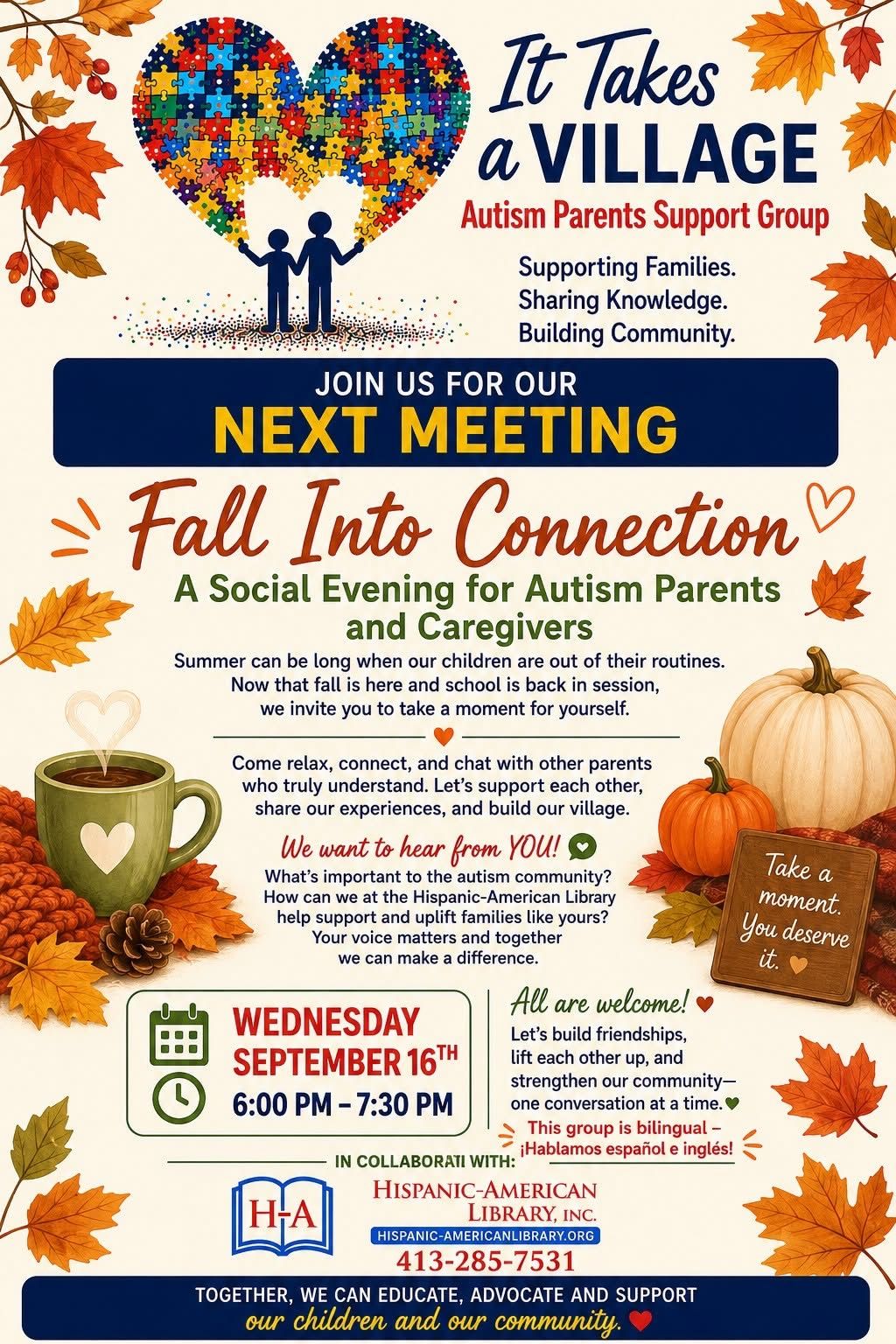
Autism parents and caregivers are also invited to the next bilingual Autism Parents Support Group meeting, Fall Into Connection, on Wednesday, September 16, from 6:00–7:30 p.m. at the Hispanic-American Library. This supportive community gathering gives families a chance to relax, connect, share experiences, and learn from one another. All are welcome, and the group is bilingual in English and Spanish.
A Message From We Are Autism

Finding the right support can take time. You do not have to enroll your child in every therapy simply because someone mentions it.
Start by understanding your child’s individual strengths, challenges, communication style, and needs. Ask questions. Learn about your options. Talk with qualified professionals. Pay attention to how your child responds. If a service is not helping, it is okay to revisit the plan and ask for a different approach.
Progress does not look the same for every child. Sometimes progress means using a new way to communicate. Sometimes it means tolerating a daily routine, trying a new food, asking for a break, or feeling more confident in a community setting.
At We Are Autism, our goal is to help families better understand the autism journey, find practical information, and feel more confident advocating for the support their children need.
Because no one should walk this journey alone.
Support. Educate. Thrive.
This article provides general educational information and is not a substitute for individualized medical, developmental, or therapeutic advice from qualified professionals. Speak with your child’s healthcare team or qualified service providers about your child’s specific needs.

Charlene Pinnock is the Founder and Executive Director of We Are Autism, a nonprofit organization dedicated to educating, empowering, and supporting families navigating the autism journey. As a parent of a child with autism and a passionate advocate, Charlene combines personal experience with practical resources to help families build confidence, strengthen advocacy skills, and connect with their communities. Through educational programs, workshops, articles, and digital resources, her mission is simple: because no one should walk this journey alone.
.avif)