Learning to communicate with your child on the spectrum doesn't have to be a struggle. By making small, sensory-friendly changes to your home and play routines, you can open up new worlds of connection. This post shares five practical tips to help you support your child's voice through visual aids, movement, and a better understanding of their sensory needs.
Good morning, families! If you’ve ever felt like you and your child are speaking two different languages, please know that you are not alone. Here at We Are Autism, we talk to parents every day who are doing their absolute best but feel stuck because they don’t have access to expensive ABA services or specialized therapists. We want you to know right now: you are your child’s best advocate and teacher. You don't need a clinic to build a bridge to your child’s world; sometimes, you just need to adjust the environment and look at things through a sensory lens.
Communication isn’t just about the words that come out of a person’s mouth. It’s about connection, gestures, eye contact (or lack thereof), and even the way a child moves their body. For our children on the spectrum, the world can be a very loud, very bright, and very overwhelming place. When a child is struggling to process the tags on their shirt or the hum of the refrigerator, they don’t have much energy left to process a long sentence like, "Go get your blue shoes from under the bed and put them on because we are going to Grandma's house."
By creating a sensory-friendly environment, we lower the "background noise" of the world so our children can focus on the message. Let’s dive into some practical, "quality over quantity" strategies you can start using today.
Before we even think about teaching new words or signs, we have to look at the space around us. Many of our children have what we call "sensory processing" differences. This means their brains might turn the volume up or down on certain sounds, lights, or touches.
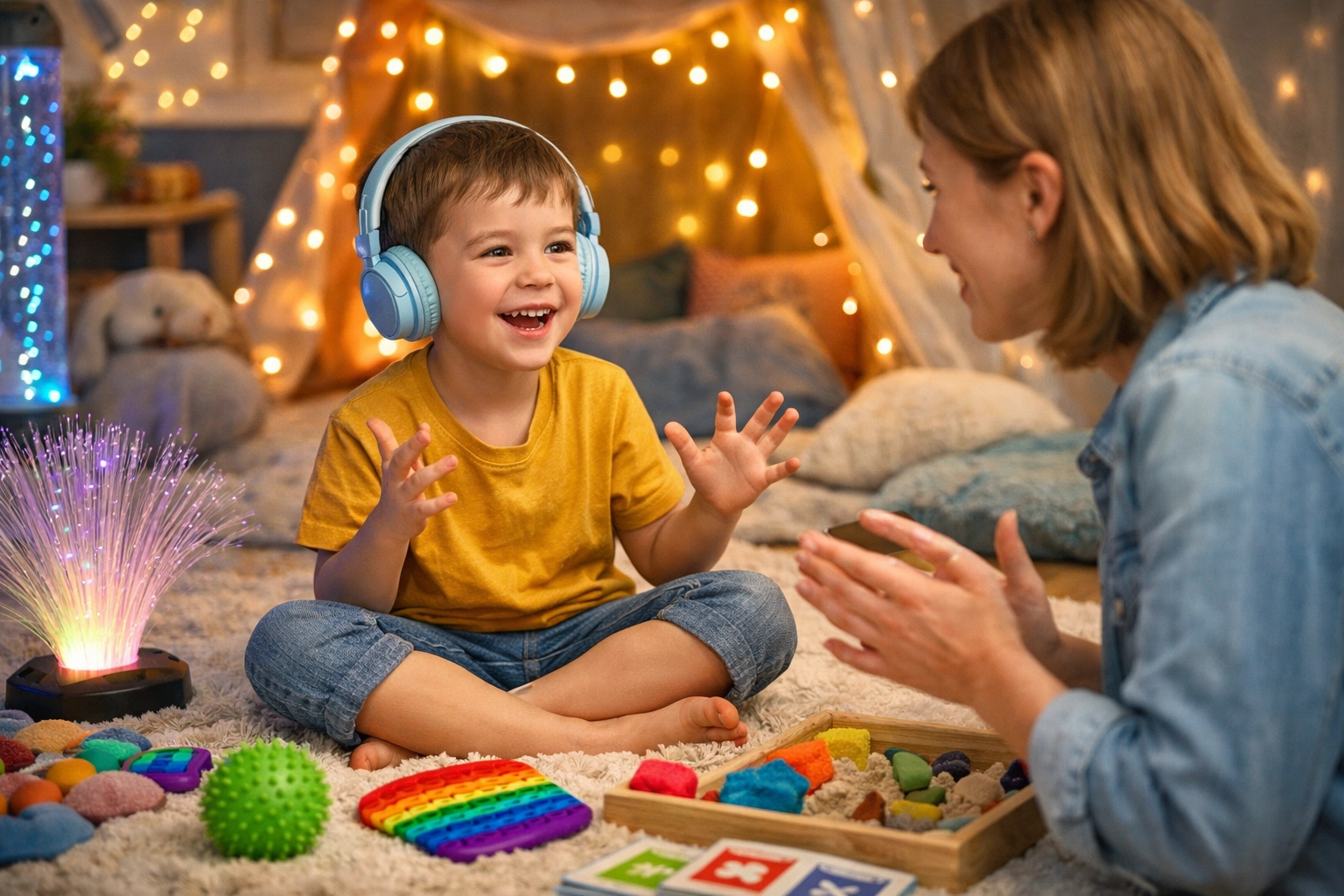
If the TV is blaring in the background, the fan is clicking, and the lights are flickering, your child’s brain is working overtime just to stay calm. To boost communication, try to create "quiet zones." Turn off the electronics when you want to have a focused interaction. Use soft lighting or natural light from a window instead of harsh overhead bulbs.
When the environment is calm, your child’s nervous system can settle down. A settled nervous system is a learning nervous system. You’ll find that when the sensory "noise" is gone, your child might be more likely to make a sound, point to a snack, or even meet your eyes for a brief, beautiful moment.

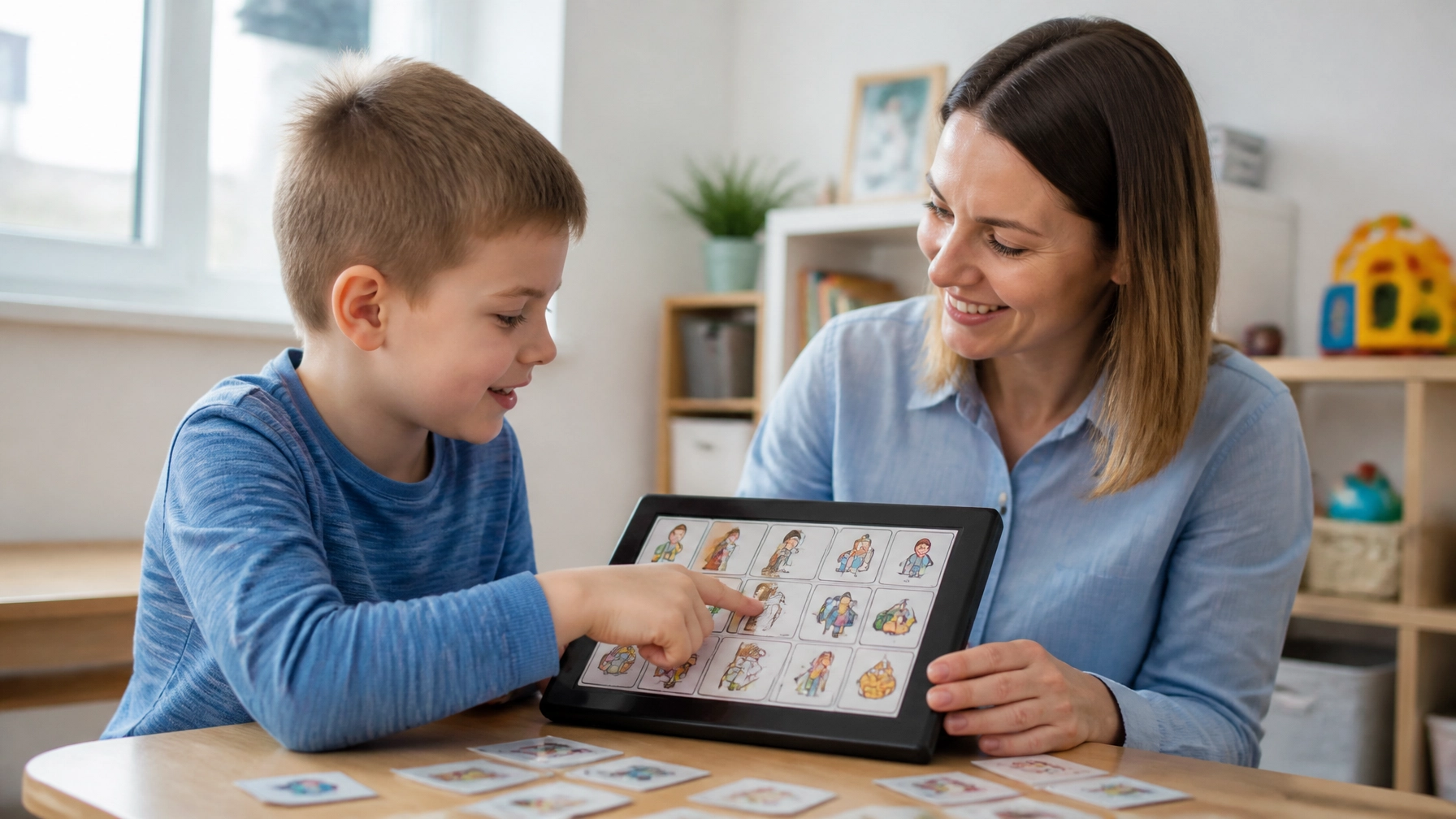
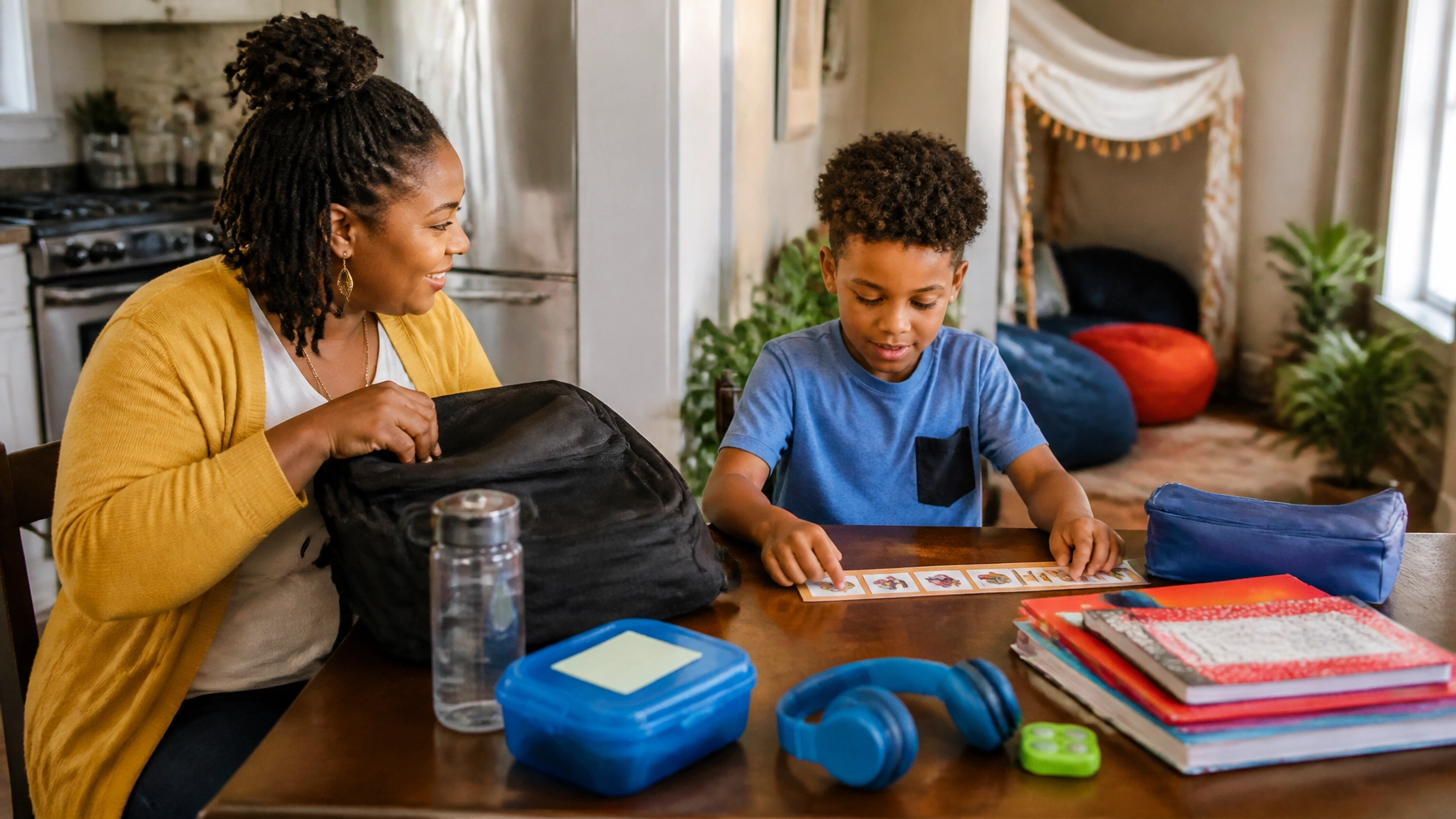
For many kids on the spectrum, words are like vapor, they disappear as soon as they are spoken. Visuals, however, are permanent. They stay there so the child can look at them, process them, and understand them at their own pace.
You don’t need fancy software to create visual aids. You can draw simple pictures on cardboard, use photos you’ve taken on your phone, or even use the actual objects. For example, if it’s time for a bath, show them the towel. If it’s time to eat, show them their plate.
In our book, "Naomi Listens with Her Eyes," we explore how communication looks different for everyone. Naomi shows us that "listening" isn't just about ears; it’s about paying attention with our whole hearts and eyes. Just like Naomi, your child might need to see the world to understand it. You can check out our full range of stories that celebrate these differences at our products page.
Sometimes as parents, we have an agenda. We want them to say "Apple." But if your child is currently obsessed with the way a toy car wheel spins, that is your golden opportunity. Instead of trying to pull them away from the car, get down on the floor with them.
Incorporate communication into what they already love. If they love the spinning wheel, you can say "Spin!" and then wait. Wait for them to look at you or do it again. This is called a "communication temptation." You are using their natural interest to spark an interaction.
We talk a lot about this in our Building Bridges video series. These videos are designed for parents just like you, offering real-life examples of how to turn everyday moments into learning opportunities. Whether you’re in Kingston or New York, the language of play is universal.

Did you know that touching and feeling can actually help a child process language? This is where sensory play becomes a powerful communication tool.
Try creating a "Play-Doh Communication Board." While your child is squishing and rolling the dough, use simple words like "Push," "Pull," "Soft," or "Blue." Because their hands are engaged in a way that feels good to their sensory system, their brain is more open to receiving the labels you are providing.
You can do this with anything, water play, sand, or even helping in the kitchen with the dough for some festival or dumplings! Our Jamaican heritage is full of sensory-rich experiences, from the smells of the kitchen to the rhythm of the music. Use those familiar, homey sensations to connect with your child. If they love the rhythm of a drum, use it to practice turn-taking. You tap once, they tap once. That is a conversation!
This is the hardest tip for most of us, but it’s the most important. Our children often need a lot more time to process information than we think. If you ask a question, try counting to ten in your head before you say anything else.
Give them space to find their "voice," whether that voice is a sign, a nudge, or a word. When we rush in to fill the silence, we often take away their chance to respond. In the members Q&A section of our site, many parents find that simply slowing down the pace of the day makes the biggest difference in their child's frustration levels.

It’s easy to get overwhelmed by all the things people tell you that you "should" be doing. But remember: quality over quantity. Five minutes of deep, sensory-rich, connected play is worth more than five hours of forced drills.
You are doing a great job. Even on the days when it feels like you’re shouting into the wind, know that your efforts are building a foundation. Every time you dim the lights, every time you use a picture to help them understand, and every time you wait those extra ten seconds for a response, you are saying, "I see you, I hear you, and I love you."
If you need more specific guidance or want to connect with other parents who understand exactly what you’re going through, please reach out to our support groups. We are a global family, and we are here to walk this path with you.

We believe that education should be accessible to everyone, regardless of where they live or what their budget looks like. That’s why we’ve filled our website with free educational articles and webinars designed to give you practical tools you can use right now.
Don't forget to look into our books like "Marcus Good Boy" or "Naomi Listens with Her Eyes" to share with your child or their siblings. These stories help normalize the sensory experiences that make our children so special and provide a beautiful way for the whole family to learn together.
Keep going, Mama. Keep going, Papa. Your child is a gift, and their way of communicating is a unique melody in the song of our community. Walk good, and stay tuned for more tips and support from your family here at We Are Autism.
If you have questions or want to share a sensory win you had this week, contact us or join the conversation on our social pages. We love hearing from you!

Charlene Pinnock is a mother, author, and the Founder of We Are Autism. Inspired by her journey raising her son Marcus, she creates meaningful books and resources that help families better understand autism, manage everyday challenges, and feel supported every step of the way. Her mission is to remind parents that they are not alone and that every child deserves to be seen, understood, and celebrated.
.avif)