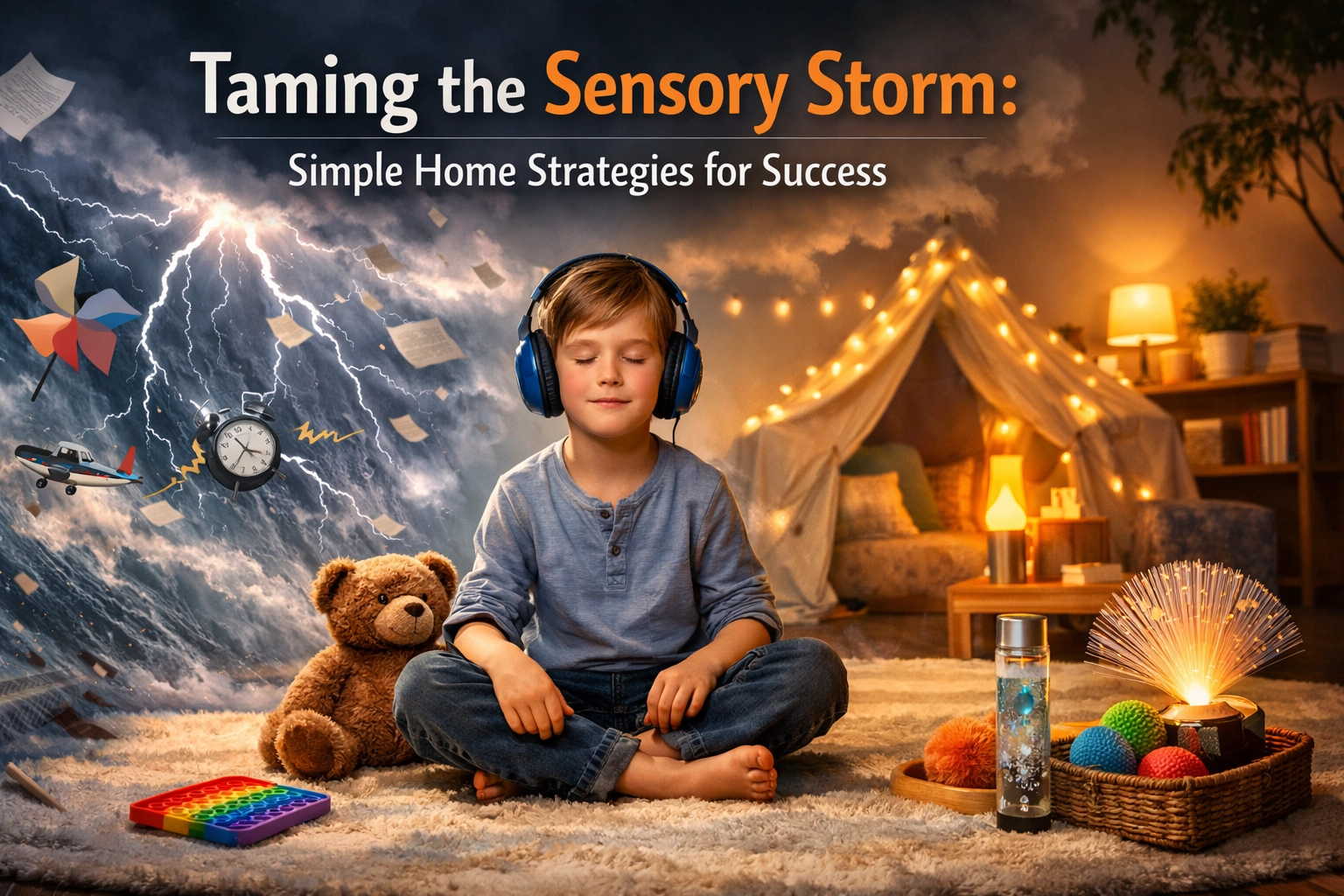
Creating a sensory-friendly home doesn't have to be overwhelming or expensive. This guide offers practical, low-cost strategies to help your child navigate sensory challenges and find calm in their everyday environment. Learn how to build a safe space, use movement effectively, and support your child’s unique needs with love and patience.
If you’ve ever felt like your home is in the middle of a literal storm, where lights are too bright, sounds are too loud, and emotions are running high, know that you aren’t alone. For many of our kiddos on the spectrum, the world doesn't just "feel" busy; it feels like an all-out assault on the senses. As parents and caregivers, we want nothing more than to provide a calm harbor for our children, but figuring out how to do that can feel like a full-time job in itself.
Welcome to Week 1 of our Weekly Autism Support Series! I’m so glad you’re here. At We Are Autism, we believe that small, intentional changes at home can lead to massive breakthroughs in regulation and happiness. You don't need a massive budget or a degree in occupational therapy to make your home a sensory-safe haven. You just need a bit of insight into how your child experiences the world and a few "tools in the shed" to help them navigate it.
Let’s dive into some simple, accessible strategies you can start using today to tame the sensory storm.
Before we get into the "how," let’s talk about the "why." Sensory Processing Disorder (SPD) often goes hand-in-hand with autism. It means the brain has trouble receiving and responding to information that comes in through the senses. Think of it like a traffic jam in the nervous system. Some kids are "sensory seekers", they crave movement, loud noises, and deep pressure. Others are "sensory avoiders", they are easily overwhelmed by things most of us barely notice, like the hum of a refrigerator or the tag on a t-shirt.
When that traffic jam happens, it often leads to what we see as "challenging behavior," but it’s actually a physiological response. By addressing the sensory need, we often find that the behavior takes care of itself.
The foundation of a sensory-friendly home is having a dedicated space where your child can retreat when the world gets to be too much. This doesn’t have to be a whole room; a corner of the living room or a small pop-up tent in the bedroom works wonders.
Minimize the Triggers:
Start by looking at the lighting. If bright overhead lights cause distress, try using soft lamps or even string lights. If noise is the issue, choose a naturally quiet corner of the house.
Fill it with "Good" Input:
Fill this space with things that help your child regulate. This might include:
Let your child help you design it! They are the experts on what feels good to their bodies. If they love soft textures, go heavy on the fleece blankets. If they need to hide, make sure there’s a way to create a "cocoon."

Movement isn't just about burning off energy; it’s a powerful tool for calming the nervous system. Research shows that specific types of movement, often called "heavy work," provide proprioceptive input, the "internal" sense that tells us where our bodies are in space.
One effective framework is the Organizing Sequence. This is a fancy way of saying we engage the body in a specific order to help it reset.
If your child is a visual learner, activities like Marcus’s Word Adventure are fantastic. These videos combine visual engagement with focused attention, helping a child channel their energy into a calm, structured activity. It gives their brain a clear "track" to follow, which is incredibly regulating when they are feeling scattered.
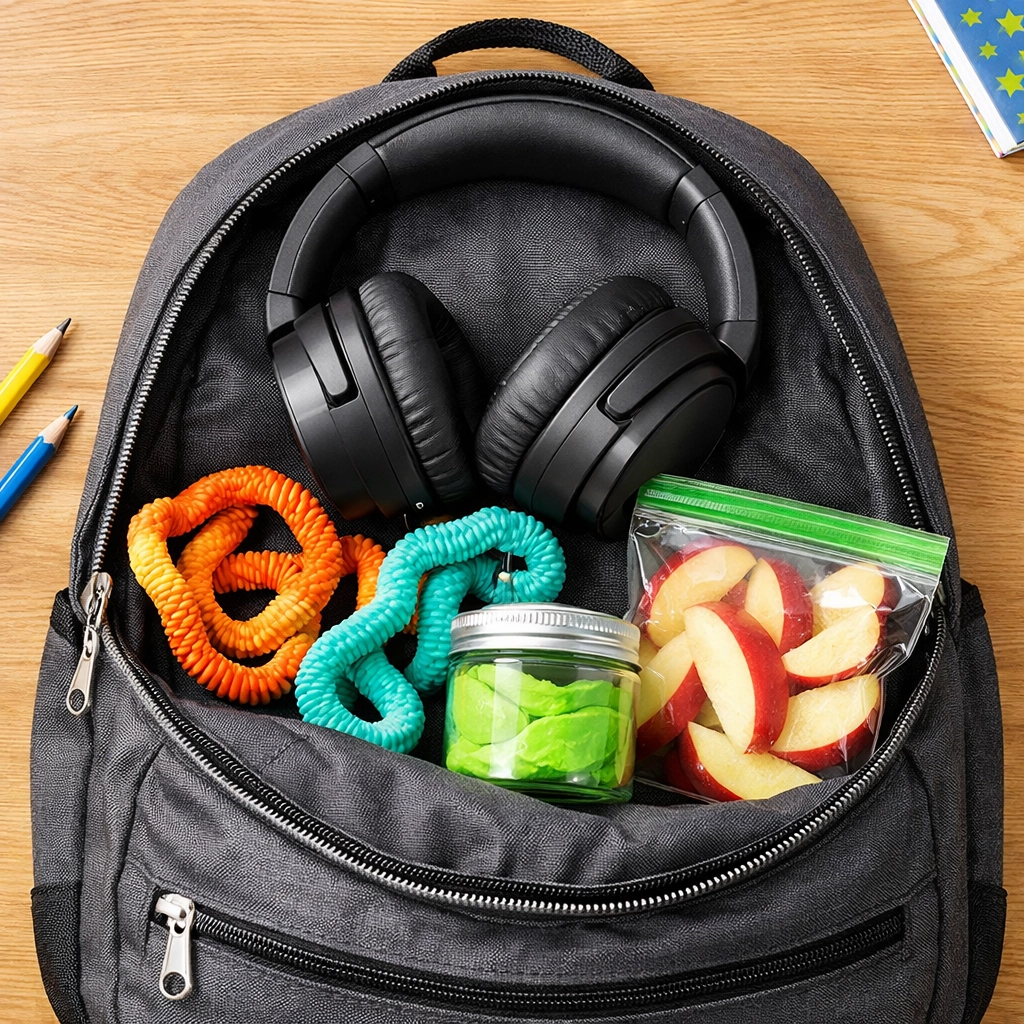
Life doesn't just happen in our safe harbor at home. We have to go to the grocery store, the doctor, and grandma’s house. This is where a portable Sensory Comfort Kit comes in.
Grab a small backpack and fill it with tools that you know work for your child. It might include:
Having this kit ready to go reduces your stress as a parent, and it gives your child a sense of agency. They know that even if the "storm" hits while you're out, they have their tools to stay safe.
One of the hardest parts of a sensory storm is that it can seem to come out of nowhere. But usually, there are tiny signals before the big meltdown. Maybe your child starts humming, rocking more intensely, or covering their ears.
Try to devise a "silent signal" with your child. It could be a specific hand gesture or a "code word" they can use when they feel the pressure building. When you see or hear that signal, it’s your cue to help them transition to a calmer environment, no questions asked. This builds a massive amount of trust. Your child learns that you are their partner in regulation, not just someone managing their behavior.
For more tips on communicating through the tough moments, check out our FAQ page where we answer common parent questions about behavior and communication.
For a child with sensory challenges, a sudden change in plans can feel like a physical jolt. Transitions are often the biggest trigger for sensory overload.
Visual Timers and Schedules:
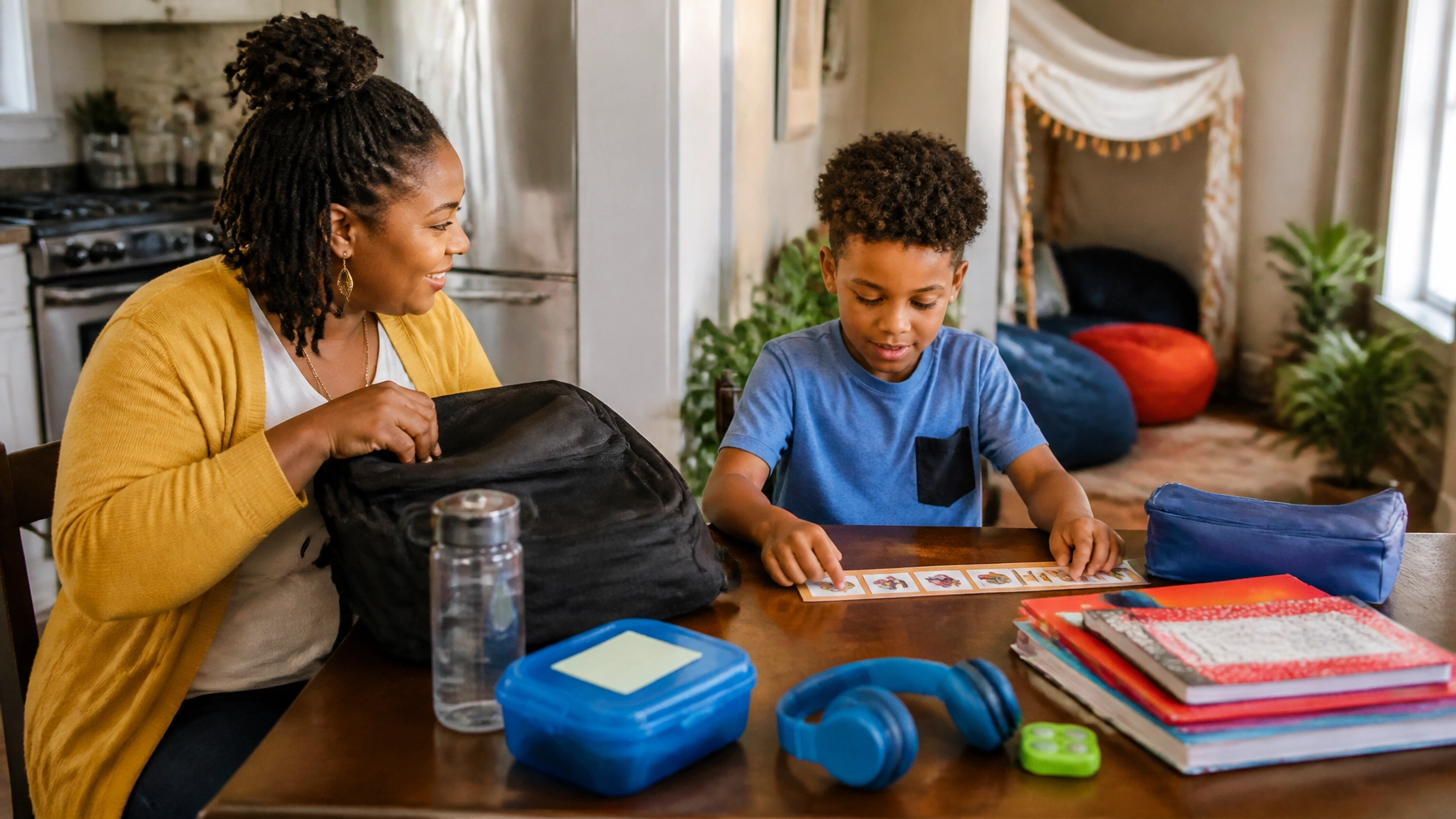
Using a visual timer (the ones where the red disc disappears as time goes by) allows your child to see time moving. It takes the "surprise" out of stopping an activity. Similarly, a simple visual schedule on the fridge can lower anxiety. If they know that "First: Lunch, Then: Park" is the plan, they can mentally prepare for the sensory shift of moving from a quiet house to a busy playground.

A common mistake we make is trying to avoid every "scary" sensory experience. While we want to protect our kids, the goal is actually to help them adapt.
If your child hates the sound of the vacuum, don't just stop vacuuming forever. Try giving them noise-canceling headphones and letting them watch from a safe distance. If they struggle with messy textures like glue or paint, try using a glue stick or putting the paint inside a Ziploc bag so they can "squish" it without getting it on their hands.
It’s all about finding the "just right" challenge. We want to push the boundaries of their comfort zone just enough to help them grow, without pushing them into a full-blown meltdown.
If your child is a "seeker" who loves to crash into things or give super-tight hugs, they are likely looking for deep pressure. This input tells the nervous system to relax.
Weighted blankets, vests, or even "heavy work" chores like carrying a basket of laundry or pushing a stroller can provide this. It’s like a hug for the whole nervous system. If you’re curious about specific products that help with this, we have some great recommendations in our resource section.

I want to end this by saying something very important: You are doing a great job. Managing sensory challenges is a process of trial and error. What works on Monday might not work on Tuesday, and that’s okay. The fact that you are looking for strategies and trying to understand your child’s world makes you an incredible advocate.
There is no one-size-fits-all solution because every one of our kids is a unique individual. Be patient with yourself and with them. If you’re feeling overwhelmed and need a community that "gets it," please consider joining one of our support groups. Sharing these struggles with other parents who are in the trenches can make all the difference.
Stay tuned for Week 2 of our series, where we’ll be talking about "Building Social Bridges." Until then, keep taming those storms, one small strategy at a time. We’re in this together!

Charlene Pinnock is the founder of We Are Autism, a support platform dedicated to helping parents and caregivers navigate the autism journey with compassion, practical guidance, and community support.
.avif)