Hey there, family! If you’ve ever looked at your child and seen that flicker of "big feelings" in their eyes, the kind that makes their shoulders hunch up to their ears or their little hands fidget uncontrollably, you know exactly what I’m talking about. Parenting is a wild ride, but watching our kids struggle with anxiety can feel like trying to navigate a ship through a storm without a compass.
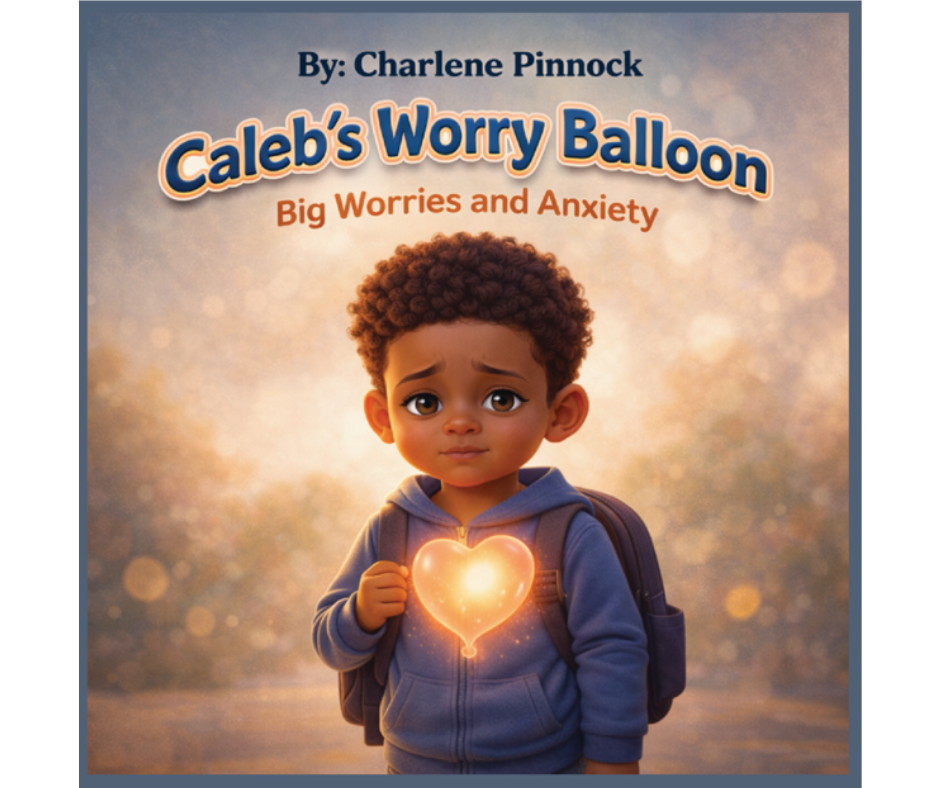
At We Are Autism, we believe that every child is "fearfully and wonderfully made," but we also know that being wonderfully made doesn't mean life is always easy. Sometimes, those big worries grow so large they feel like they might just take over. That’s exactly why I wrote my newest book, Caleb’s Worry Balloon: Big Worries and Anxiety.
Today, I want to take a deep dive into Caleb’s world and share some heart-to-heart advice on how we, as parents and caregivers, can help our kids float through those heavy moments rather than sinking under them.
In the book, we meet Caleb, a sweet boy who experiences anxiety in a way many of our kids do, physically. Have you ever noticed your child complaining of a tummy ache before a birthday party? Or maybe they get a little "extra" energetic and scattered when a routine changes?
Caleb describes his anxiety as a balloon filling up inside his chest. It makes his heart beat fast, and his thoughts start to spin like a merry-go-round that won’t stop. It’s a metaphor that kids can actually grab onto. For many of our children, especially those on the spectrum or with sensory processing differences, abstract concepts like "anxiety" are hard to grasp. But a balloon? They get that. They know what it feels like when a balloon is overfilled and ready to pop.
Caleb's Worry Balloon isn't just a standalone story; it’s a proud member of our 'Fearfully and Wonderfully Made' series. This series features African American children and was born out of a desire to see our children—especially Black and Brown children and those from diverse global communities—represented in stories that validate their unique experiences.
Whether you’re in the heart of Kingston or the middle of New York City, the feeling of a "worry balloon" is universal. We want our kids to know that their brains might work differently, and their hearts might feel more deeply, but they are exactly who they are supposed to be. If you want to check out more resources for your family, our educational articles are a great place to start.

Let’s be real for a second. Often, when kids get anxious, the world tells them to "just calm down" or "don't worry about it." If only it were that easy! For families who might not have access to intensive ABA services, or for those who have finished their programs and are wondering, "What now?", these generic tips feel pretty empty.
In our community, we focus on practical, culturally-competent support. We don't need fancy equipment to help our kids manage anxiety; we need connection, understanding, and a few good tools in our back pocket.
So, how do we actually help? Here are a few strategies inspired by Caleb’s journey that you can start using today:
When Caleb feels his chest getting tight, he learns to recognize it as his "worry balloon." Encourage your child to give their worry a name. It could be a "fizzy feeling," a "heavy rock," or a balloon. By naming it, they move from being inside the feeling to observing it. This small shift gives them a sense of control.
If you let go of a balloon all at once, it flies around the room wildly. But if you let the air out slowly, it stays calm. Teach your child "Slow Leak" breathing. Have them take a deep breath in through their nose (smelling a flower) and then blow it out very slowly through their mouth (blowing out a candle). You can even use bubbles to practice this! It’s a great way to slow down that racing heartbeat Caleb talks about.
Visualization is a powerful tool. Ask your child, "What color is your worry balloon today?" Then, imagine together putting the worry, maybe it’s about a loud noise or a change in schedule, inside that balloon. Then, mentally (or even physically with a real balloon!), watch it float away into the clouds.

I often talk about "building bridges" between where our kids are and where they want to be. Sometimes that bridge is built through stories, and sometimes it’s built through community. If you haven't seen our Building Bridges video series, I highly recommend it. We talk about real-life scenarios that parents face every day, offering tips that are easy to implement at home.
Anxiety doesn't just affect the child; it affects the whole family. It can be exhausting to be the "calm" for someone else's "storm." That’s why we host support groups. You don’t have to do this alone. Connecting with other parents who "get it" is sometimes the best medicine for our own worry balloons.
In many cultures, including our Jamaican community, we haven't always talked openly about mental health or autism. We might have called a child "shy" or "difficult" when they were actually struggling with deep anxiety.
By using Caleb's story, we're breaking those barriers. We’re saying it’s okay to talk about the fast heartbeat and the spinning thoughts. We’re teaching our kids that their feelings are valid and manageable. If you're looking for more ways to support your child's journey, browse through our products designed to celebrate and advocate for the spectrum community.

One practical tip I love to share with parents is creating a physical space for these big feelings. It doesn't have to be a whole room, it can just be a corner with a soft pillow, some fidget toys, and maybe a copy of Caleb’s Worry Balloon.
When the world gets too loud or the worries get too big, this is the "Safe Zone." No "work" happens here, and there are no expectations. It’s just a place to breathe and let the balloon deflate. This is especially helpful for kids who might be overwhelmed by sensory input and need a low-stimulation environment to reset.
I want to leave you with this: you are doing a great job. The fact that you’re here, reading this and looking for ways to support your child, speaks volumes. Whether you are navigating the school system, looking for emergency hotlines during a crisis, or just trying to get through a trip to the grocery store, you are the expert on your child.
Caleb eventually learns that while he might have a worry balloon, it doesn't have to carry him away. With your help, your child can learn to keep their feet on the ground, even when the wind starts to blow.
If you have questions or just want to share your story, please reach out through our contact page or join us for one of our upcoming webinars. We are a family here, and we are in this together.
Let’s keep building those bridges, one balloon at a time.
Stay blessed,
Charlene Pinnock
Founder & Executive Director – We Are Autism

Want to grab your own copy of Caleb's Worry Balloon? Visit our shop to find the book and other "Fearfully and Wonderfully Made" resources!

Charlene Pinnock is the founder of We Are Autism, a support platform dedicated to helping parents and caregivers navigate the autism journey with compassion, practical guidance, and community support.
.avif)